Fix Rounded Upper Back and Shoulders: A Simple, Biomechanics-Based Approach
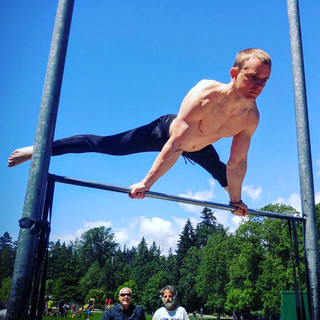

Rounded upper back and shoulders are one of the most common postural issues today. If you spend time sitting, working at a computer, or training without proper awareness of body mechanics, you are likely reinforcing this pattern every day.
Most people think this is just an “alignment problem.” It’s not. The real issue is how your nervous system coordinates the muscles of your spine and core. Your posture is not something you hold. It is something your body produces automatically based on learned patterns.
If those patterns are inefficient, your spine collapses forward, your shoulders round, and your body starts compensating. Over time, this can lead to stiffness, discomfort, reduced mobility, and even chronic pain in the neck, shoulders, and lower back.
To fix rounded shoulders and improve posture, you need to address the spine first.
The upper spine, or thoracic spine, is designed to extend and support an open chest position. But when the muscles surrounding it are not working in coordination, it loses that ability. Instead of stabilizing dynamically, the spine falls into a passive, rounded shape.
This is why stretching alone does not solve the problem. You can stretch your chest and shoulders every day, but if your body does not know how to actively control spinal position, the results will not last.
The solution is to rebuild control.
You need to teach your body how to coordinate spinal muscles and the core so that proper alignment becomes automatic again. This means working through controlled movements that emphasize awareness, precision, and repeatable mechanics.
Start with simple drills that help you feel your spine. Learn how to move it segment by segment. Then integrate that control with your core so the trunk can stabilize during movement, not just in static positions.
Once the spine begins to function properly, shoulder mechanics can improve naturally. But they still require direct work. The shoulders depend on the spine for positioning, but they also need their own strength and coordination to stay open and stable.
Consistency matters more than intensity. Practicing a short routine two to three times per week is enough to start changing the pattern. What matters is how well you perform the movements, not how hard they feel.
The final step is integration.
If you only train for 20 minutes and spend the rest of your day sitting in a collapsed position, progress will be slow. You need to gradually bring awareness into your daily activities. Sitting, standing, walking, and training should all reflect the same principles.
Fixing rounded upper back and shoulders is not about forcing yourself into a “perfect posture.” It is about building a system where your body naturally organizes itself in a more efficient way.
That is the difference between temporary correction and long-term change.
If you want a structured, step-by-step system with detailed explanations and drills, you can find it in my 58-page illustrated ebook available here.

Comments